
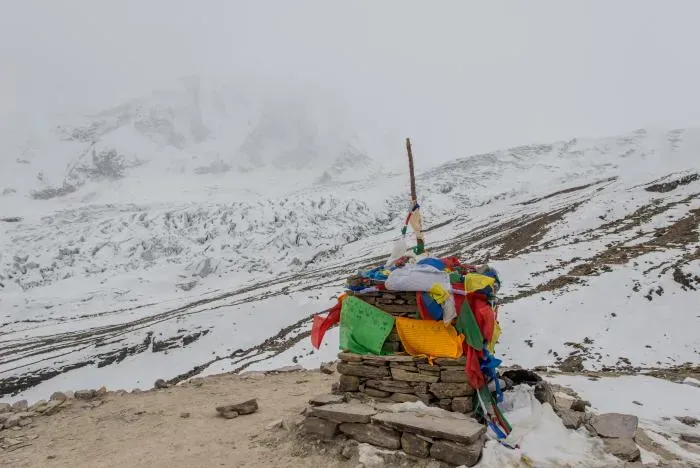
The Manaslu Circuit Trek is one of the most rewarding long-distance treks in the Himalayas. It circles Mount Manaslu (8,163 m), the eighth-highest mountain on Earth. The route passes through subtropical river gorges, Buddhist villages close to the Tibetan border, and rhododendron forests. It then climbs to the glacier-flanked Larkya La Pass (5,160 m). Permits and a guide are mandatory, so the trail stays far quieter than the Annapurna or Everest regions. This guide covers what you need to plan your trek.
Why Trek the Manaslu Circuit?
The main reason is the combination of scenery, culture, and solitude. Most trekkers who come here are looking for something more remote than the popular routes in Nepal.
-
Dramatic variety. You start near 700 m in warm, terraced farmland and finish by crossing a high Himalayan pass. The landscape changes every day.
-
Living Tibetan culture. Upper villages such as Samagaon and Samdo have monasteries, mani walls, and stone houses. Their traditions have more in common with Tibet than with lowland Nepal.
-
Fewer crowds. Teahouses are simpler and trails are quieter, so the experience feels closer to how trekking in Nepal used to be.
-
Views of Manaslu itself. You see the mountain from many sides, along with Himalchuli, Ngadi Chuli, and Annapurna II.
Trek at a Glance
|
Detail |
Information |
|
Typical duration |
14–18 days |
|
Maximum altitude |
5,160 m (Larkya La Pass) |
|
Difficulty |
Moderate to challenging |
|
Start |
Soti Khola or Machha Khola (via Arughat) |
|
End |
Dharapani (Annapurna side) |
|
Best seasons |
March–May and late September–November |
|
Accommodation |
Teahouses |
|
Guide required |
Yes, licensed and agency-arranged |
Route Overview and Sample Itinerary
Most itineraries start with a long drive from Kathmandu to Soti Khola or Machha Khola. They then follow the Budhi Gandaki River upstream, climbing steadily before the pass.
Days 1–3: River gorges and lowland villages. The trail follows the Budhi Gandaki through Jagat and Deng. Expect steep stone staircases, suspension bridges, and waterfalls. It is hot and humid at this stage.
Days 4–6: Into the Nubri Valley. Beyond Namrung and Lho, the landscape opens up and the culture becomes distinctly Tibetan. On a clear morning, the view of Manaslu from Lho is one of the best on the trek.
Days 7–9: Samagaon and acclimatization. Samagaon is the main acclimatization stop. Day hikes to Pungyen Gompa or Manaslu Base Camp help your body adjust before the higher sections. Samdo, the last permanent village before the pass, follows.
Days 10–12: Larkya La crossing. You sleep at Dharamsala (Larkya Phedi), then start before dawn for the pass. The crossing takes roughly 8–10 hours, including a long descent to Bhimthang.
Days 13–15: Descent to Dharapani. The trail drops through forest and meadow to Tilije and Dharapani. From there, a jeep takes you toward Besisahar and on to Kathmandu.
Permits and Regulations
Manaslu is a restricted area, and the rules are strict. The following reflects current 2026 information from operators, and fees can change, so confirm with your agency before you book.
-
Manaslu Restricted Area Permit (RAP): In the September–November season it costs USD 100 for the first seven days, plus USD 15 per additional day. From December to August, it is USD 75 for the first week, plus USD 10 per additional day.
-
Manaslu Conservation Area Permit (MCAP): About NPR 3,000 for most foreign nationals.
-
Annapurna Conservation Area Permit (ACAP): About NPR 3,000, needed for the final stretch toward Dharapani.
-
Chumnubri Rural Municipality fee: About NPR 1,000 per person.
-
Tsum Valley permit: An extra permit applies if you add this side trip.
The RAP must be arranged through a registered trekking agency, and you must hike with a licensed guide. A TIMS card is generally not required for the Manaslu section. Recent reports indicate the old two-person minimum for the RAP has been relaxed, so solo travelers can apply, but only with a guide. Ask your agency to confirm the current rule when you book.
Best Time to Trek
Autumn (late September to November) is the most popular season. Skies are clear, the air is crisp, and views are at their best. It is also the busiest time and the most expensive for permits.
Spring (March to May) brings blooming rhododendrons, warmer temperatures, and good visibility. It is a strong alternative to autumn, with a cheaper RAP in March through August.
Winter and monsoon are harder. Snow can close Larkya La in winter, and monsoon rain brings leeches, landslides, and cloud cover. Experienced trekkers sometimes go in the shoulder periods, but most people should avoid these seasons.
Difficulty and Fitness Preparation
The Manaslu Circuit is not technical, but it is demanding. You will walk 5–8 hours a day for over two weeks, with steep climbs, long descents, and a high-altitude pass near 5,200 m. The main risk is altitude sickness, not terrain.
Start training 8–12 weeks ahead. Focus on:
-
Cardio endurance: Hiking, running, or cycling three to four times a week.
-
Leg strength: Squats, lunges, and step-ups.
-
Back-to-back long days: Practice carrying a daypack on hilly terrain.
Altitude safety matters more than speed. Ascend gradually, drink plenty of water, and respect rest days. Headache, nausea, dizziness, or unusual fatigue are warning signs. Tell your guide early, and descend if symptoms worsen. Consider discussing Diamox with your doctor before you go.
Accommodation and Food
Teahouses along the route are simple, with twin rooms, shared bathrooms, and a communal dining hall. Facilities become more basic above Samagaon, and rooms are unheated. Sleeping bags are strongly recommended.
Dal bhat, Nepal’s staple meal of rice, lentils, and vegetables, is reliable and filling. Noodles, momos, pancakes, and soups are also widely available. Choose vegetarian meals at altitude, since meat is usually less fresh in remote villages. Bring water purification tablets or a filter, and pack snacks for long days.
Estimated Cost
Operator estimates for 2026 generally put a guided Manaslu Circuit trek at roughly USD 1,200 to 2,800 per person, depending on group size, comfort level, and services. That range usually includes permits, guide fees, accommodation, meals, and transport. Budget for extras such as porter tips, charging, hot showers, Wi-Fi, travel insurance, and gear rental.
Essential Packing List
-
Clothing: Layered system, down jacket, waterproof shell, warm hat, gloves
-
Footwear: Broken-in trekking boots and warm socks
-
Sleeping: Four-season sleeping bag (or rental)
-
Gear: Trekking poles, headlamp, sunglasses, sunscreen
-
Health: Personal medication, first-aid kit, water purification
-
Documents: Passport copies, permits, insurance with high-altitude cover
Make sure your insurance covers trekking up to 5,500 m and helicopter evacuation. This is non-negotiable on a remote route like Manaslu.
Responsible Trekking Tips
The Manaslu region is ecologically sensitive and culturally significant. Carry out your waste, avoid single-use plastic, and ask before photographing people. Walk clockwise around mani walls and stupas, dress modestly in villages, and support local businesses by staying in community-run teahouses.
Frequently Asked Questions
Is the Manaslu Circuit harder than the Annapurna Circuit?
It is comparable in altitude but more remote, with simpler lodging and fewer services. Most trekkers find it somewhat more demanding.
Can beginners do it?
Fit beginners with strong motivation can, but prior multi-day trekking experience is recommended.
Is there mobile network and Wi-Fi?
Coverage is patchy and improves in larger villages. Expect limited connectivity above Samagaon.
Conclusion
The Manaslu Circuit Trek offers the scale of the great Himalayan routes without the crowds. It rewards preparation with Tibetan-influenced villages, high-mountain scenery, and the satisfaction of crossing Larkya La. Choose a reputable agency, allow time for acclimatization, and time your trip for spring or autumn. With the right planning, this trek can be the highlight of your time in Nepal.
